
Justice & Enforcement
Anishinaabe of the Kitchi Zibi First Nation is protected by the Anishinaabe Security Force
Mission and Authority
The Anishinaabe Security Force (ASF) stands as the operational arm of the Kitchi Zibi Anishinaabe Nation, tasked with upholding peace, sovereignty, and the inherent rights of the People under Section 35 of the Constitution Act, the Royal Proclamation of 1763, and the United Nations Declaration on the Rights of Indigenous Peoples (UNDRIP). ASF officers are sworn protectors of community safety, cultural continuity, and lawful governance within recognized territorial boundaries.
Operational Framework
ASF operates under a unified mandate of Justice and Enforcement, guided by the combined responsibilities of the Bear Clan and Martin Clan, collectively known as the Ogichidaa—the Anishinaabemowin word for Warrior. This integration blends tactical, environmental enforcement with investigative and intelligence operations, reflecting the holistic warrior role within the Nation.
Leadership is structured with the Grand Chief serving as the head of ASF, overseeing the entire force. Chiefs of designated clan areas within Anishinaabe territory provide regional leadership, ensuring that local customs and responsibilities are respected and upheld. Individual Ogichidaa serve as senior protectors and field commanders, embodying the Warrior spirit and operational excellence.
Each ASF officer carries the responsibility to:
- Enforce community laws and uphold treaty rights.
- Protect citizens from external interference and unlawful state actions.
- Maintain discipline and accountability through transparent procedures.
- Collaborate with allied agencies while preserving Indigenous jurisdiction.
- Protect and provide all emergency services to all lives
- Incorporate traditional knowledge of the land and skills used by our ancestors since time immemorial
Officer Designations
ASF recognizes the following officer designations, all of whom are warriors with equal duties and responsibilities:
- Grand Chief (Ogima) – The supreme leader and head of the ASF, responsible for overall command and strategic direction.
- Chief (Ogima) – Leaders of designated clan areas within Anishinaabe territory, overseeing regional operations and ensuring clan responsibilities are upheld.
- Ogichidaa – Individual warriors serving as senior protectors and field commanders, embodying the warrior spirit and operational excellence.
All officers share the same fundamental duties:
- Enforce community laws and uphold treaty rights.
- Protect citizens from external interference and unlawful state actions.
- Maintain discipline and accountability through transparent procedures.
- Collaborate with allied agencies while preserving Indigenous jurisdiction.
The unified Bear-Martin Clan Division continues to operate as the tactical, environmental enforcement, investigative, and intelligence arm of the ASF, guided by the warrior ethos shared by all officer designations.
Symbolism and Identity
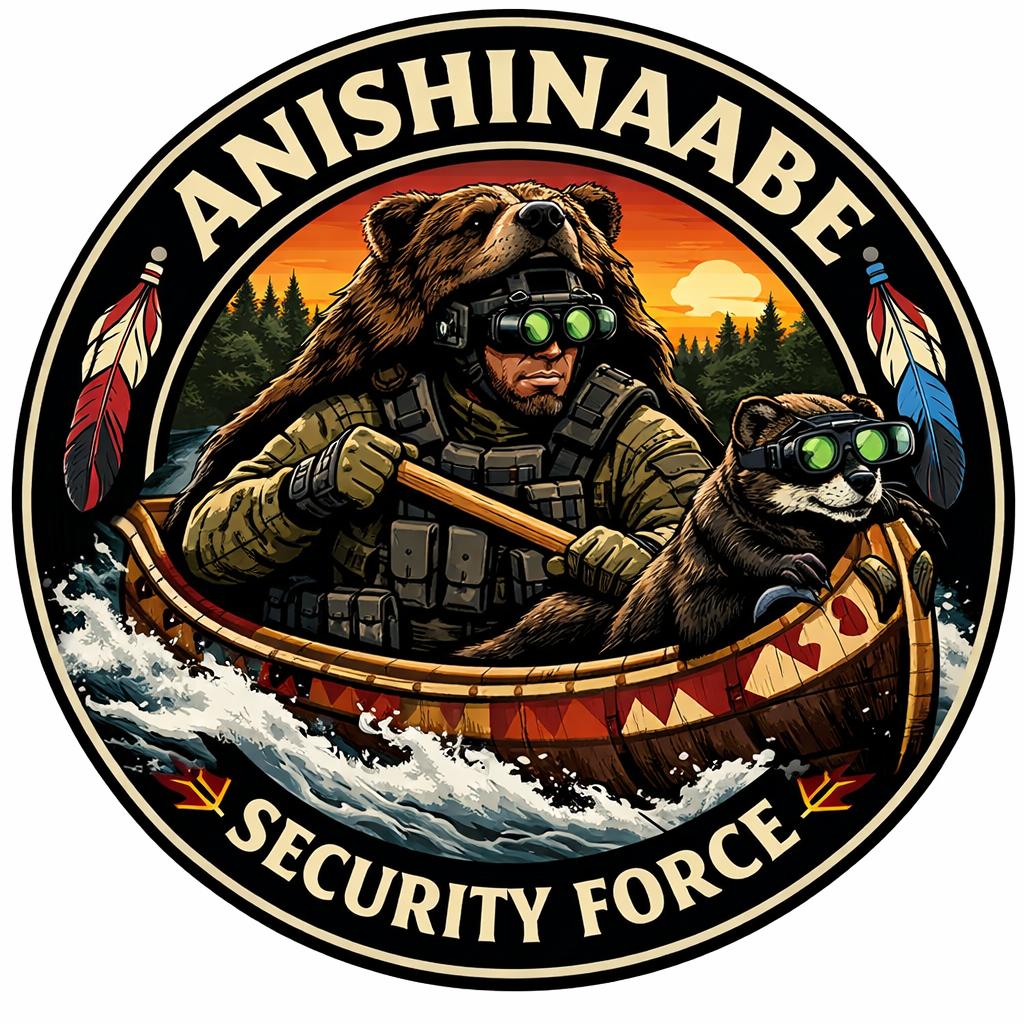
The ASF emblem and badge represent unity between ancestral guardianship and modern enforcement. The Ogichidaa symbolizes courage and discipline, while the ASF shield and badge embody protection, sovereignty, and the enduring spirit of the Nation.
Jurisdiction and Enforcement Scope
ASF maintains authority over:
- Community safety and emergency response.
- Environmental and resource protection.
- Enforcement of Nation laws and bylaws.
- Coordination with federal and provincial agencies under mutual respect agreements.
Accountability and Oversight
ASF operates transparently under the AOKFN Governance Council, ensuring all enforcement actions align with constitutional, cultural, and humanitarian standards. Reports and disciplinary reviews are conducted through the Justice & Enforcement Committee, maintaining integrity and public trust.
Governing Law Reference
To ensure full transparency and accessibility, the ASF provides a direct link to its governing legal framework.
This document outlines the foundational statutes, enforcement protocols, and jurisdictional boundaries recognized by the Nation and its partners.